


5 May 2026
Linaria ricardoi: when plans are made to conserve something that has been proven not to exist

Linaria ricardoi. Photo: Rfmc/Wikimedia Commons.
Open Letter to the Ministry of the Environment and Energy regarding the Management Plan for the Alvito/Cuba Special Area of Conservation
The credibility of the Natura 2000 network rests on its effectiveness in conserving natural values found within areas designated for this purpose, in a significant and demonstrable manner. This is why it constitutes one of the central pillars of European biodiversity conservation policy.
The proposed Management Plan for the Special Area of Conservation (SAC) Alvito/Cuba (PTCON0035), drawn up by the ICNF – Institute for Nature Conservation and Forests, which was open for public consultation between 2 and 30 April, was created with the sole aim of conserving the endemic and priority plant Linaria ricardoi, a species listed in Annex II of the European Union’s Habitats Directive. However, there is no longer any confirmed population of Linaria ricardoi within the current boundaries of the Alvito/Cuba SAC, according to the results of surveys carried out between 2019 and 2020 by the ICNF itself, nor in those of 2025 commissioned by the SPB – Portuguese Botanical Society.
The conservation objective for this species, which is restricted to the Lower Alentejo, led to the creation of the Alvito/Cuba Site, included in the National List of Sites in 2000, with more than two decades having passed since its classification. Since it was reclassified from a Site to a Special Area of Conservation, it has spent a further six years without any management plan. The result is clear: the species is in the process of becoming extinct, its threat status has risen, and the strategy followed has failed to halt this trend.
However, the Portuguese government’s own official documents – including the Report on the Completion of the SAC Designation Process and the Management Plan now being proposed – set out measures that are clearly inconsistent and out of touch with reality:
The proposed Management Plan insists on setting targets such as ‘increasing the number of occupied grid squares’ or ‘increasing population density’ in both plots classified as SACs, applied to a territory where the plant simply does not occur.
A SAC that fails to meet the criteria of the Habitats Directive
According to Directive 92/43/EEC, the designation of Special Areas of Conservation must be based, amongst other criteria, on the actual existence of populations of the species to be conserved and on the ecological suitability of the site to ensure their long-term survival.
Maintaining a designated SAC in an area where:
1 - The species no longer occurs;
2 - The soils do not meet its ecological requirements;
3 - And the dominant intensive and super-intensive agricultural practices are incompatible with its life cycle, represents a clear departure from the objectives of the Habitats Directive and undermines the coherence of the Natura 2000 network.
Currently, the Management Plan in question proposes maintaining the area’s current boundaries and extending this strategy for a period of ten years, based on the slim ‘possibility of a seed bank persisting in the soil’, whilst there is scientific evidence that the maintenance of a seed bank in intensive olive groves is unlikely due to changes in ecological conditions. There are well-documented alternative areas where the species reproduces successfully in several municipalities.
Poor conservation also wastes time and undermines the effective protection of the species.
Persisting with the implementation of an ill-suited management plan means, in practice:
1 - Diverting public resources to an area that does not meet the species’ needs;
2 - Imposing territorial restrictions on local communities without any proven ecological benefit;
3 - Postponing, yet again, the effective protection of the population clusters that ensure the survival of Linaria ricardoi.
Nature conservation requires difficult decisions, but ones based on evidence. Today, official documentation itself acknowledges that there is a mismatch between the Natura 2000 network and the areas where Linaria ricardoi is most abundant.
Given this acknowledgement, it is incomprehensible to insist on the approval of a Management Plan that perpetuates this error.
We therefore advocate that:
• The current proposed Management Plan for the Alvito/Cuba SAC should not be approved in its current form;
• The process must be reformulated based on the redefinition of the SAC boundaries to include areas where the species actually occurs and where there are population clusters that ensure national genetic diversity;
• The entities associated with and responsible for the Alqueva Multi-purpose Project, such as EDIA – Empresa de Desenvolvimento e Infra-estruturas do Alqueva, S.A., should improve the effectiveness of the measures stipulated in the Environmental Impact Statements and Environmental Compliance Reports (given that they have failed to prevent the extinction or the process of extinction in around 87 populations of L. ricardoi, due to the direct destruction of their habitat, over a period of 20 years).
Protecting an endangered species must take place where it exists, where it can survive, and where conservation measures make sense, in close collaboration with the local community.
Conserving nature requires rigour, but also humility to correct past and current missteps. In this case, such a correction is not only possible, but urgent.
This open letter is signed by Palombar – Association for the Conservation of Nature and Rural Heritage – and by CPADA – Portuguese Confederation of Environmental Protection Associations, the country’s largest environmental organisation, comprising around 100 environmental protection associations or non-governmental environmental organisations at national, regional and local levels, both on the mainland and in the Autonomous Regions.
The credibility of the Natura 2000 network rests on its effectiveness in conserving natural values found within areas designated for this purpose, in a significant and demonstrable manner. This is why it constitutes one of the central pillars of European biodiversity conservation policy.
The proposed Management Plan for the Special Area of Conservation (SAC) Alvito/Cuba (PTCON0035), drawn up by the ICNF – Institute for Nature Conservation and Forests, which was open for public consultation between 2 and 30 April, was created with the sole aim of conserving the endemic and priority plant Linaria ricardoi, a species listed in Annex II of the European Union’s Habitats Directive. However, there is no longer any confirmed population of Linaria ricardoi within the current boundaries of the Alvito/Cuba SAC, according to the results of surveys carried out between 2019 and 2020 by the ICNF itself, nor in those of 2025 commissioned by the SPB – Portuguese Botanical Society.
The conservation objective for this species, which is restricted to the Lower Alentejo, led to the creation of the Alvito/Cuba Site, included in the National List of Sites in 2000, with more than two decades having passed since its classification. Since it was reclassified from a Site to a Special Area of Conservation, it has spent a further six years without any management plan. The result is clear: the species is in the process of becoming extinct, its threat status has risen, and the strategy followed has failed to halt this trend.
However, the Portuguese government’s own official documents – including the Report on the Completion of the SAC Designation Process and the Management Plan now being proposed – set out measures that are clearly inconsistent and out of touch with reality:
The proposed Management Plan insists on setting targets such as ‘increasing the number of occupied grid squares’ or ‘increasing population density’ in both plots classified as SACs, applied to a territory where the plant simply does not occur.
A SAC that fails to meet the criteria of the Habitats Directive
According to Directive 92/43/EEC, the designation of Special Areas of Conservation must be based, amongst other criteria, on the actual existence of populations of the species to be conserved and on the ecological suitability of the site to ensure their long-term survival.
Maintaining a designated SAC in an area where:
1 - The species no longer occurs;
2 - The soils do not meet its ecological requirements;
3 - And the dominant intensive and super-intensive agricultural practices are incompatible with its life cycle, represents a clear departure from the objectives of the Habitats Directive and undermines the coherence of the Natura 2000 network.
Currently, the Management Plan in question proposes maintaining the area’s current boundaries and extending this strategy for a period of ten years, based on the slim ‘possibility of a seed bank persisting in the soil’, whilst there is scientific evidence that the maintenance of a seed bank in intensive olive groves is unlikely due to changes in ecological conditions. There are well-documented alternative areas where the species reproduces successfully in several municipalities.
Poor conservation also wastes time and undermines the effective protection of the species.
Persisting with the implementation of an ill-suited management plan means, in practice:
1 - Diverting public resources to an area that does not meet the species’ needs;
2 - Imposing territorial restrictions on local communities without any proven ecological benefit;
3 - Postponing, yet again, the effective protection of the population clusters that ensure the survival of Linaria ricardoi.
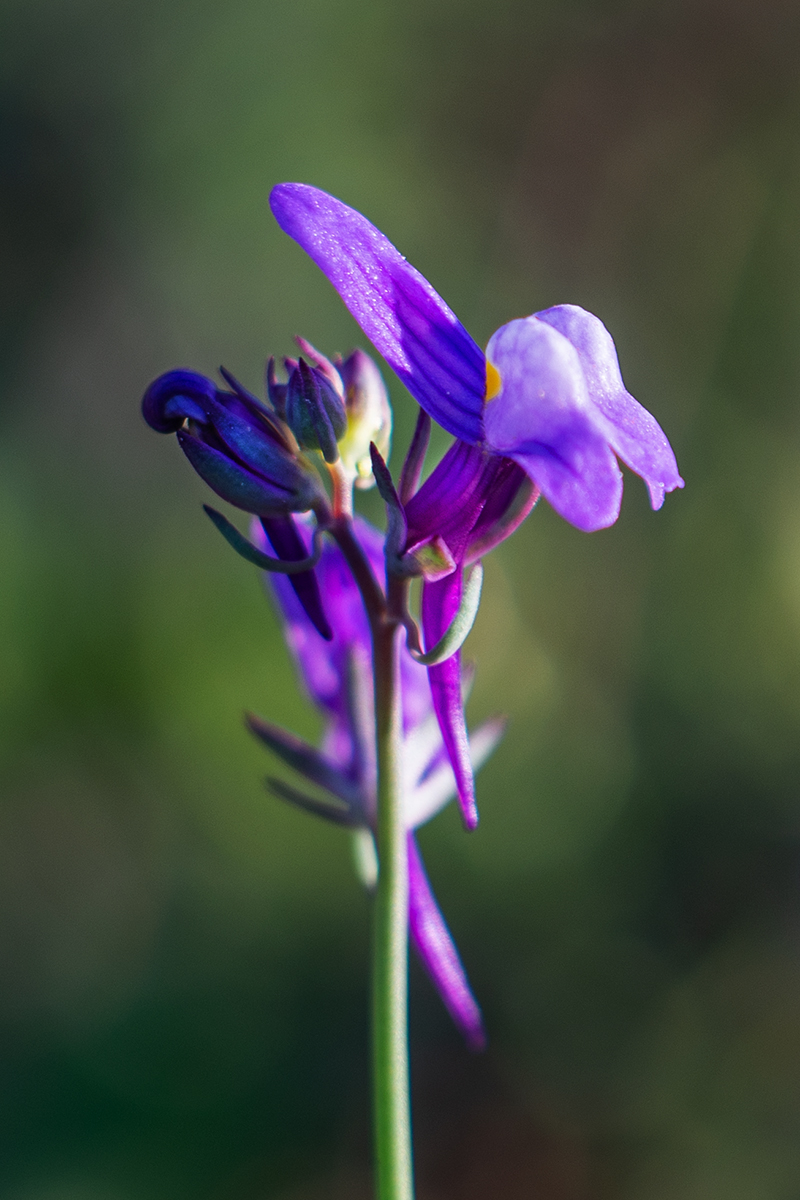
We advocate for the effective conservation of this endemic and priority species, where it can and must thrive. Photo: Rfmc/Wikimedia Commons.
A call for consistency, science and institutional courage
Nature conservation requires difficult decisions, but ones based on evidence. Today, official documentation itself acknowledges that there is a mismatch between the Natura 2000 network and the areas where Linaria ricardoi is most abundant.
Given this acknowledgement, it is incomprehensible to insist on the approval of a Management Plan that perpetuates this error.
We therefore advocate that:
• The current proposed Management Plan for the Alvito/Cuba SAC should not be approved in its current form;
• The process must be reformulated based on the redefinition of the SAC boundaries to include areas where the species actually occurs and where there are population clusters that ensure national genetic diversity;
• The entities associated with and responsible for the Alqueva Multi-purpose Project, such as EDIA – Empresa de Desenvolvimento e Infra-estruturas do Alqueva, S.A., should improve the effectiveness of the measures stipulated in the Environmental Impact Statements and Environmental Compliance Reports (given that they have failed to prevent the extinction or the process of extinction in around 87 populations of L. ricardoi, due to the direct destruction of their habitat, over a period of 20 years).
Protecting an endangered species must take place where it exists, where it can survive, and where conservation measures make sense, in close collaboration with the local community.
Conserving nature requires rigour, but also humility to correct past and current missteps. In this case, such a correction is not only possible, but urgent.
This open letter is signed by Palombar – Association for the Conservation of Nature and Rural Heritage – and by CPADA – Portuguese Confederation of Environmental Protection Associations, the country’s largest environmental organisation, comprising around 100 environmental protection associations or non-governmental environmental organisations at national, regional and local levels, both on the mainland and in the Autonomous Regions.