


2 November 2026
The return of the giant: the cinereous vulture population continues to grow and a new colony has been discovered in Portugal
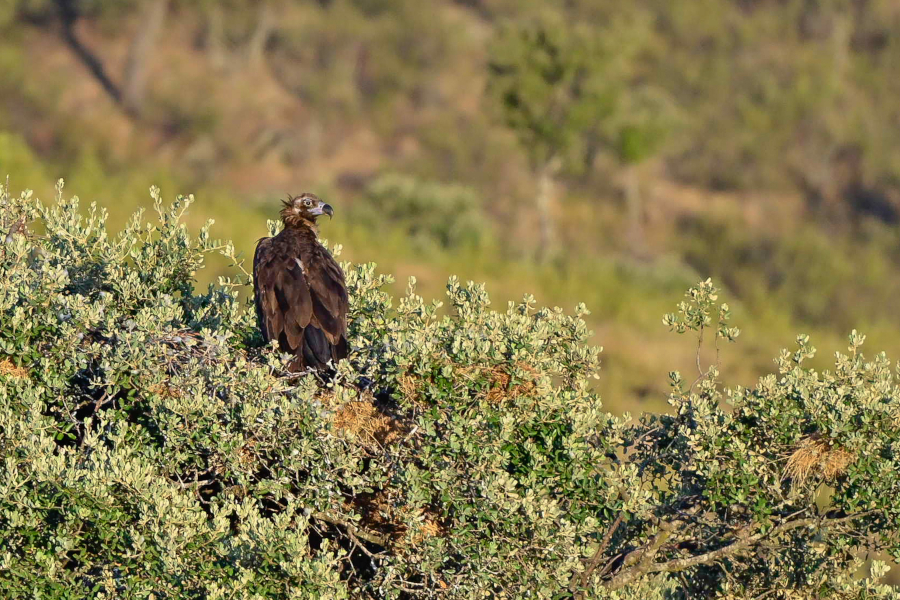
The cinereous vulture was once extinct in Portugal as a breeding species in the 1970s, and the return of this bird is a success story for nature conservation in the country. Photo: Paulo Monteiro/SPEA.
There are already six colonies of this endangered species within the country, but effective consolidation requires ongoing effort
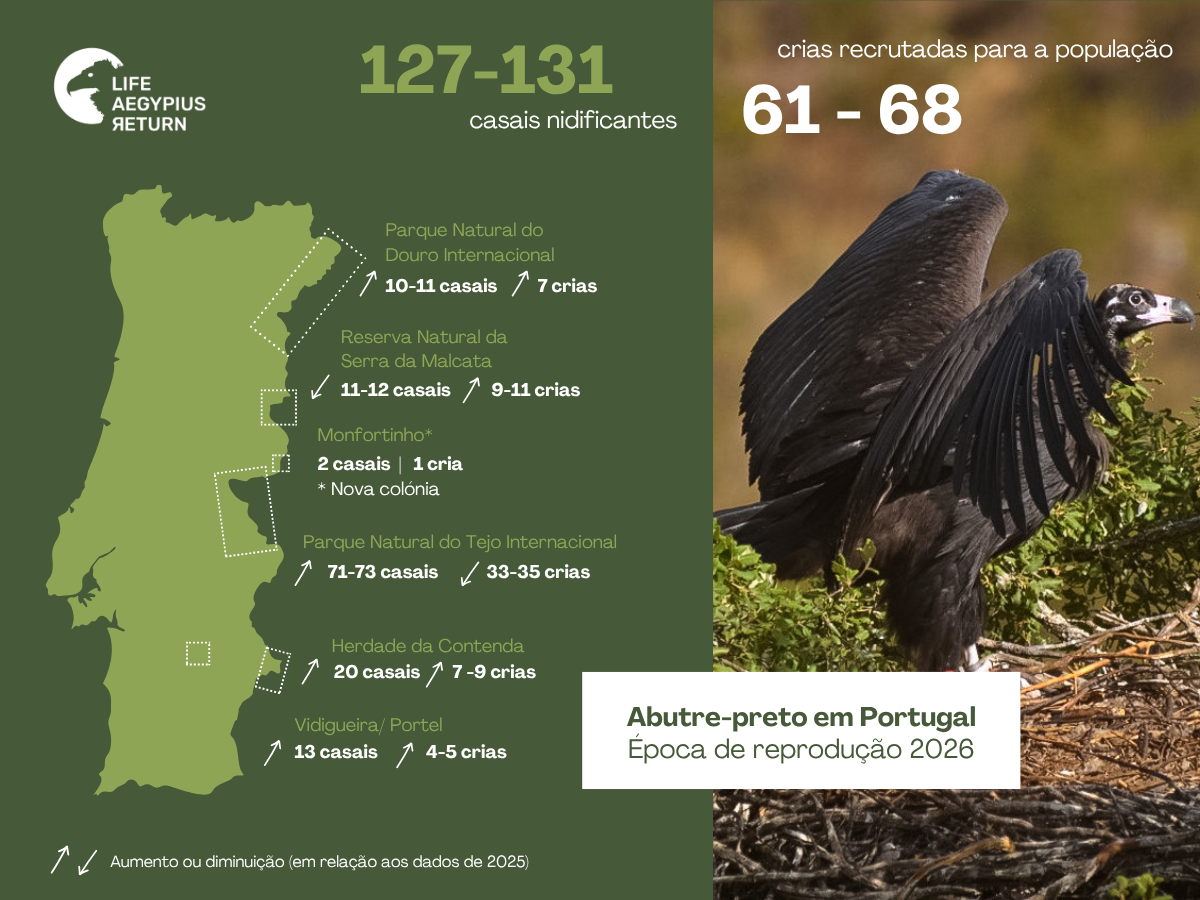
The recovery of the cinereous vulture (Aegypius monachus) in Portugal continues to gain ground, according to the latest monitoring results from the 2026 breeding season, which confirm further population growth for this endangered species. This year, between 127 and 131 breeding pairs were recorded in the monitored colonies, compared with 119–126 pairs in 2025. The number of chicks that reached fledging age also increased, rising from 56 juveniles the previous year to an estimated 61 to 68 fledglings this season.
But there is more: a new breeding colony has been discovered in Monfortinho, in the Central region of Portugal, bringing the number of known colonies in the country to six. This marks yet another positive milestone in the species’ recovery, demonstrating the importance of continuous monitoring and the cinereous vulture’s potential to recolonise areas of its former range where it had become locally extinct.
However, population growth alone does not guarantee the species’ long-term recovery. Continued monitoring efforts, increased food availability, effective protection of breeding habitats and the implementation of measures to mitigate existing threats remain essential to securing the future of this threatened species.
A growing population, with a new colony
The 2026 results show progress in several established breeding areas in Portugal, although the trends observed vary between colonies.
Monfortinho: newly discovered colony has two breeding pairs and seven nests
One of the most exciting discoveries of the 2026 breeding season was the identification of a new colony in Monfortinho, in the municipality of Idanha-a-Nova, in the Central region, with two breeding pairs identified and seven nests found in the area.
Both pairs laid eggs and the colony produced one fledgling. Although still small in size, this new breeding group represents a very significant development: the establishment of new colonies can contribute to the recolonisation of areas historically occupied by the species and strengthen its recovery process in Portugal.
This discovery highlights the importance of systematic field monitoring. The early detection of new breeding sites allows for a better understanding of population trends and helps identify areas where the implementation of targeted conservation measures may be necessary.
Douro Internacional: ongoing recovery
The Douro Internacional colony recorded between 10 and 11 breeding pairs in 2026, an increase on the 8 pairs recorded in 2025. Ten pairs laid eggs, resulting in the hatching of seven fledglings.
This represents significant progress for a colony that suffered severe impacts following the devastating forest fire of August 2025. The latest findings suggest that the breeding population continues to recover, and some of the birds released into the wild through the project’s Acclimatisation Programme have also shown signs of breeding behaviour. However, the long-term prospects for this colony will continue to depend on breeding success, habitat protection and the continuation of conservation efforts.
Serra da Malcata: a strategic link between colonies
In the Serra da Malcata, the monitoring team recorded between 11 and 12 breeding pairs. Eleven pairs laid eggs, producing between 9 and 11 fledglings.
Situated between the Douro and Tagus regions and close to suitable habitat on the other side of the border with Spain, Malcata plays an important role in connectivity between breeding areas. Maintaining favourable habitat conditions and ensuring that birds can move safely between colonies will be key factors as the population continues to expand.
Tejo Internacional: the main stronghold of the Portuguese population
Tejo Internacional remains the species’ largest breeding area in Portugal, with an estimated 71 to 73 breeding pairs in 2026. Of these, 63 pairs laid eggs, resulting in the production of 33 to 35 fledglings.
This colony continues to account for more than half of the breeding pairs recorded in the monitored areas. Its size and geographical extent make monitoring particularly challenging, whilst the cross-border distribution of the birds underscores the importance of collaboration between Portuguese and Spanish authorities and conservation organisations.
The protection of this core population is essential, ensuring not only the continued growth of the species but also ecological connectivity with the other breeding colonies.
Vidigueira/Portel: consolidation in the Alentejo
The Vidigueira/Portel colony, first identified in 2024, maintained 13 breeding pairs in 2026. Of these, 10 pairs laid eggs, resulting in 4 to 5 new fledglings.
The establishment of this colony in the Alentejo has already been a significant development, extending the species’ breeding range to regions further away from the Spanish border. Its persistence over time is an encouraging sign, although breeding performance continues to warrant attention.
Protecting this area from disturbances and poorly planned development projects will be crucial to ensuring that this colony can become established and contribute more consistently to the strengthening of the national population.
Herdade da Contenda: maintaining an important breeding area
At Herdade da Contenda, the estimated number of breeding pairs reached 20, of which 18 laid eggs. The colony produced between 7 and 9 fledglings.
As one of the most important breeding areas in southern Portugal, Herdade da Contenda remains crucial to the species’ national recovery. Sustaining monitoring efforts and implementing appropriate habitat management measures will help to maintain this colony and its contribution to the population.
Improved breeding performance
Across the six colonies monitored, 114 pairs laid eggs in 2026, producing an estimated 61 to 68 fledglings. Breeding success was estimated at 0.54 to 0.60 fledglings per breeding pair, an increase compared to the 0.50 calculated in 2025.
These results represent an improvement in reproductive performance, alongside an increase in the number of breeding pairs. However, the differences observed between colonies demonstrate that the species’ recovery is not uniform. Some areas show encouraging results, whilst others continue to face challenges that may limit their contribution to population growth.
The results also highlight the importance of monitoring that goes beyond simply counting breeding pairs. Understanding how many pairs attempt to breed, how many successfully rear their young, and how these indicators vary from year to year is essential for assessing the population’s long-term prospects.
Securing the future of the cinereous vulture
The return of the cinereous vulture as a breeding species in Portugal, following its extinction as a breeding species in the country during the 1970s, is a very important milestone in conservation. The most recent results reinforce the positive trend observed in recent years and confirm that the species is re-establishing its breeding presence within the country.
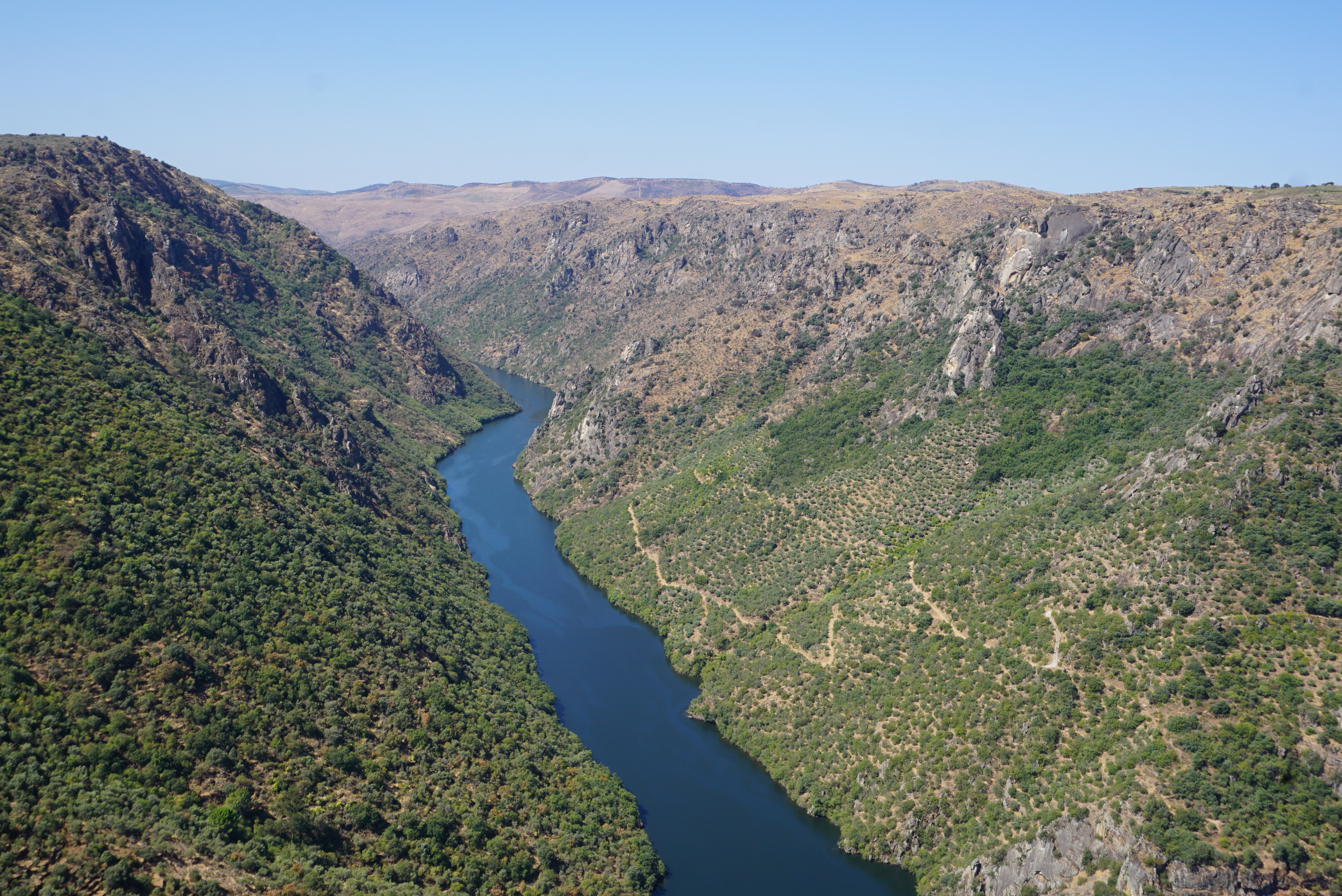
The challenges are ever-present
Some major challenges are always present and, at any moment, can have a direct and significant impact on the conservation of the species. Forest fires and extreme weather events can lead to the destruction of nests and breeding failure, whilst poisoning, illegal hunting and human disturbance continue to pose direct threats to vultures. Food scarcity also presents a significant challenge, particularly for juveniles during the critical period following fledging. At the same time, the rapid development of renewable energy infrastructure in Portugal requires careful planning to minimise the risks of collision and electrocution, as well as habitat loss and disturbance in sensitive breeding areas.
Success built on cross-border collaboration
The success achieved so far in the recovery of cinereous vulture populations is underpinned by strong cross-border collaboration between Portugal and Spain. At least three of the currently known breeding colonies (Douro Internacional, Tejo Internacional and Herdade da Contenda) are situated along the border between Portugal and Spain and are therefore of a cross-border nature.
In addition, two other colonies (Malcata and Monfortinho) are situated very close to the border, with their easternmost nests lying a short distance from Spanish territory. Although no direct cross-border breeding activity has yet been observed in these colonies, it is considered highly likely that they also function as shared breeding sites between the two countries.
The monitoring carried out by the partners of the LIFE Aegypius Return project also covers some immediately adjacent areas in Spain. At least 33 of the pairs monitored this year (out of a total of 127 to 131 breeding pairs) have their territories and nests located in Spain, on the other side of the border.
About the project
The LIFE Aegypius Return project is co-financed by the European Union’s LIFE programme. Its success depends on the involvement of all the relevant stakeholders, and the collaboration of the partners: the Vulture Conservation Foundation (VCF), the coordinating beneficiary, and the local partners Palombar – Conservação da Natureza e do Património Rural (co-funded by Viridia - Conservation in Action, Lightsource bp and MAVA - Fondation pour la Nature), Herdade da Contenda, Sociedade Portuguesa para o Estudo das Aves, Liga para a Protecção da Natureza, Associação Transumância e Natureza, Fundación Naturaleza y Hombre, Guarda Nacional Republicana and Associação Nacional de Proprietários Rurais Gestão Cinegética e Biodiversidade.
The recovery of the cinereous vulture (Aegypius monachus) in Portugal continues to gain ground, according to the latest monitoring results from the 2026 breeding season, which confirm further population growth for this endangered species. This year, between 127 and 131 breeding pairs were recorded in the monitored colonies, compared with 119–126 pairs in 2025. The number of chicks that reached fledging age also increased, rising from 56 juveniles the previous year to an estimated 61 to 68 fledglings this season.
But there is more: a new breeding colony has been discovered in Monfortinho, in the Central region of Portugal, bringing the number of known colonies in the country to six. This marks yet another positive milestone in the species’ recovery, demonstrating the importance of continuous monitoring and the cinereous vulture’s potential to recolonise areas of its former range where it had become locally extinct.
However, population growth alone does not guarantee the species’ long-term recovery. Continued monitoring efforts, increased food availability, effective protection of breeding habitats and the implementation of measures to mitigate existing threats remain essential to securing the future of this threatened species.
A growing population, with a new colony
The 2026 results show progress in several established breeding areas in Portugal, although the trends observed vary between colonies.
The giant is making a comeback, but challenges remain constant and consolidation requires ongoing effort.
Monfortinho: newly discovered colony has two breeding pairs and seven nests
One of the most exciting discoveries of the 2026 breeding season was the identification of a new colony in Monfortinho, in the municipality of Idanha-a-Nova, in the Central region, with two breeding pairs identified and seven nests found in the area.
Both pairs laid eggs and the colony produced one fledgling. Although still small in size, this new breeding group represents a very significant development: the establishment of new colonies can contribute to the recolonisation of areas historically occupied by the species and strengthen its recovery process in Portugal.
This discovery highlights the importance of systematic field monitoring. The early detection of new breeding sites allows for a better understanding of population trends and helps identify areas where the implementation of targeted conservation measures may be necessary.
Douro Internacional: ongoing recovery
The Douro Internacional colony recorded between 10 and 11 breeding pairs in 2026, an increase on the 8 pairs recorded in 2025. Ten pairs laid eggs, resulting in the hatching of seven fledglings.
This represents significant progress for a colony that suffered severe impacts following the devastating forest fire of August 2025. The latest findings suggest that the breeding population continues to recover, and some of the birds released into the wild through the project’s Acclimatisation Programme have also shown signs of breeding behaviour. However, the long-term prospects for this colony will continue to depend on breeding success, habitat protection and the continuation of conservation efforts.
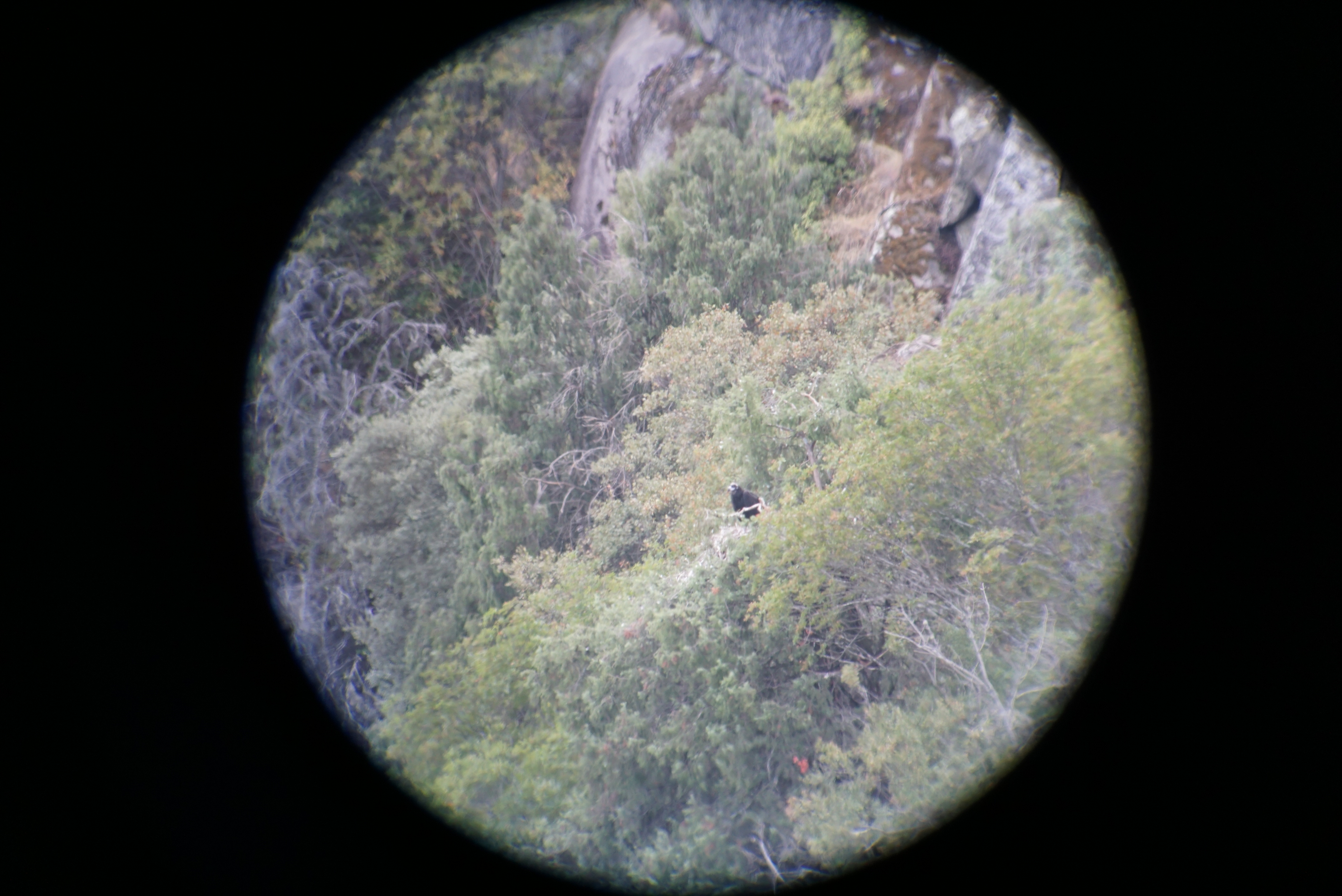
Monitoring the Douro Internacional colony is essential to ensure successful breeding. Photo: Iván Gutiérrez/Palombar.
Serra da Malcata: a strategic link between colonies
In the Serra da Malcata, the monitoring team recorded between 11 and 12 breeding pairs. Eleven pairs laid eggs, producing between 9 and 11 fledglings.
Situated between the Douro and Tagus regions and close to suitable habitat on the other side of the border with Spain, Malcata plays an important role in connectivity between breeding areas. Maintaining favourable habitat conditions and ensuring that birds can move safely between colonies will be key factors as the population continues to expand.
Tejo Internacional: the main stronghold of the Portuguese population
Tejo Internacional remains the species’ largest breeding area in Portugal, with an estimated 71 to 73 breeding pairs in 2026. Of these, 63 pairs laid eggs, resulting in the production of 33 to 35 fledglings.
This colony continues to account for more than half of the breeding pairs recorded in the monitored areas. Its size and geographical extent make monitoring particularly challenging, whilst the cross-border distribution of the birds underscores the importance of collaboration between Portuguese and Spanish authorities and conservation organisations.
The protection of this core population is essential, ensuring not only the continued growth of the species but also ecological connectivity with the other breeding colonies.
Vidigueira/Portel: consolidation in the Alentejo
The Vidigueira/Portel colony, first identified in 2024, maintained 13 breeding pairs in 2026. Of these, 10 pairs laid eggs, resulting in 4 to 5 new fledglings.
The establishment of this colony in the Alentejo has already been a significant development, extending the species’ breeding range to regions further away from the Spanish border. Its persistence over time is an encouraging sign, although breeding performance continues to warrant attention.
Protecting this area from disturbances and poorly planned development projects will be crucial to ensuring that this colony can become established and contribute more consistently to the strengthening of the national population.
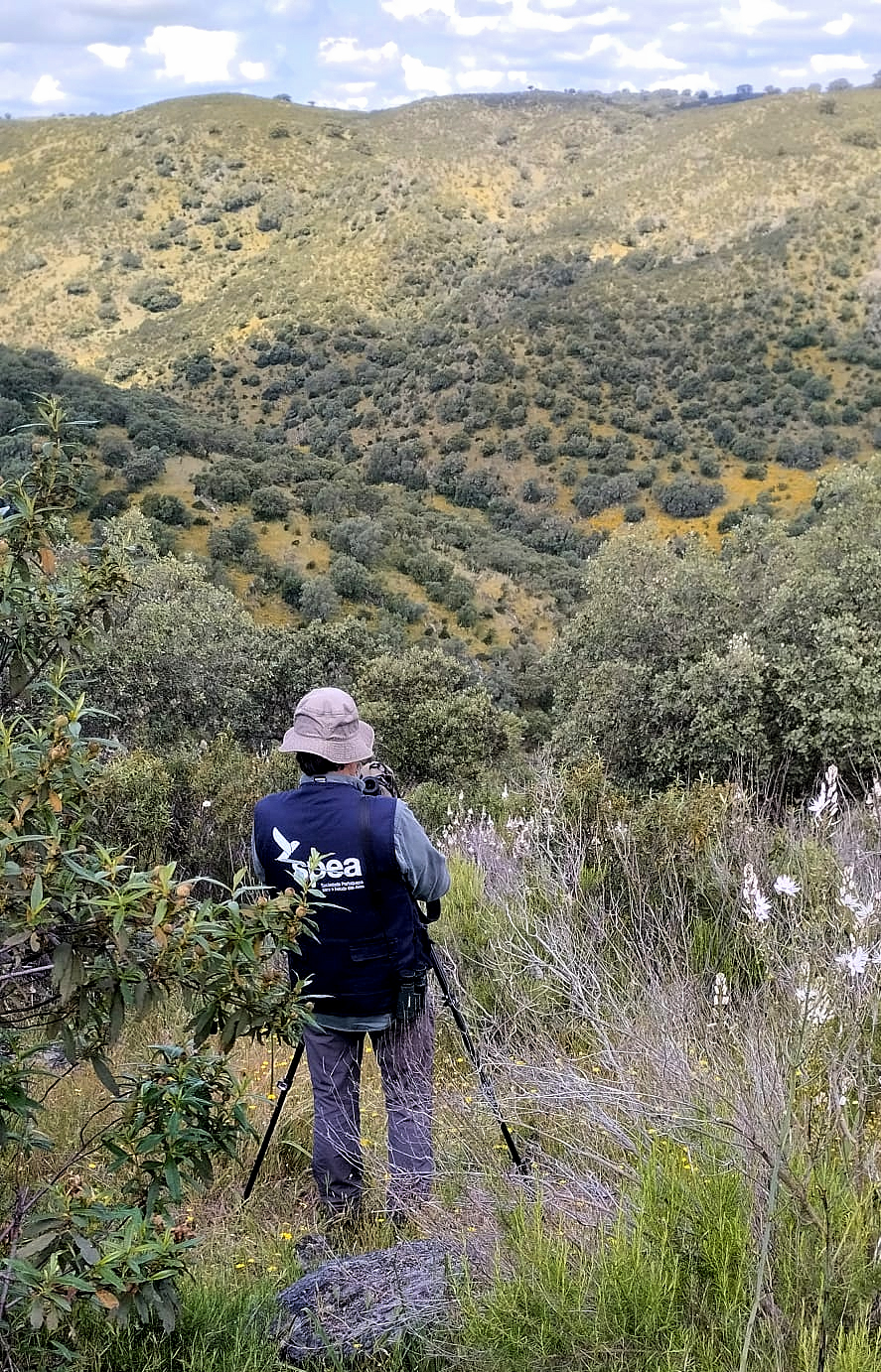
All colonies are continuously monitored by the project’s technical teams. Photograph: Célia Rosa.
Herdade da Contenda: maintaining an important breeding area
At Herdade da Contenda, the estimated number of breeding pairs reached 20, of which 18 laid eggs. The colony produced between 7 and 9 fledglings.
As one of the most important breeding areas in southern Portugal, Herdade da Contenda remains crucial to the species’ national recovery. Sustaining monitoring efforts and implementing appropriate habitat management measures will help to maintain this colony and its contribution to the population.
Improved breeding performance
Across the six colonies monitored, 114 pairs laid eggs in 2026, producing an estimated 61 to 68 fledglings. Breeding success was estimated at 0.54 to 0.60 fledglings per breeding pair, an increase compared to the 0.50 calculated in 2025.
These results represent an improvement in reproductive performance, alongside an increase in the number of breeding pairs. However, the differences observed between colonies demonstrate that the species’ recovery is not uniform. Some areas show encouraging results, whilst others continue to face challenges that may limit their contribution to population growth.
The results also highlight the importance of monitoring that goes beyond simply counting breeding pairs. Understanding how many pairs attempt to breed, how many successfully rear their young, and how these indicators vary from year to year is essential for assessing the population’s long-term prospects.
Securing the future of the cinereous vulture
The return of the cinereous vulture as a breeding species in Portugal, following its extinction as a breeding species in the country during the 1970s, is a very important milestone in conservation. The most recent results reinforce the positive trend observed in recent years and confirm that the species is re-establishing its breeding presence within the country.
Cross-border collaboration is essential to consolidate the species’ recovery. Photo: Iván Gutiérrez/Palombar.
The challenges are ever-present
Some major challenges are always present and, at any moment, can have a direct and significant impact on the conservation of the species. Forest fires and extreme weather events can lead to the destruction of nests and breeding failure, whilst poisoning, illegal hunting and human disturbance continue to pose direct threats to vultures. Food scarcity also presents a significant challenge, particularly for juveniles during the critical period following fledging. At the same time, the rapid development of renewable energy infrastructure in Portugal requires careful planning to minimise the risks of collision and electrocution, as well as habitat loss and disturbance in sensitive breeding areas.
Success built on cross-border collaboration
The success achieved so far in the recovery of cinereous vulture populations is underpinned by strong cross-border collaboration between Portugal and Spain. At least three of the currently known breeding colonies (Douro Internacional, Tejo Internacional and Herdade da Contenda) are situated along the border between Portugal and Spain and are therefore of a cross-border nature.
In addition, two other colonies (Malcata and Monfortinho) are situated very close to the border, with their easternmost nests lying a short distance from Spanish territory. Although no direct cross-border breeding activity has yet been observed in these colonies, it is considered highly likely that they also function as shared breeding sites between the two countries.
The monitoring carried out by the partners of the LIFE Aegypius Return project also covers some immediately adjacent areas in Spain. At least 33 of the pairs monitored this year (out of a total of 127 to 131 breeding pairs) have their territories and nests located in Spain, on the other side of the border.
About the project
The LIFE Aegypius Return project is co-financed by the European Union’s LIFE programme. Its success depends on the involvement of all the relevant stakeholders, and the collaboration of the partners: the Vulture Conservation Foundation (VCF), the coordinating beneficiary, and the local partners Palombar – Conservação da Natureza e do Património Rural (co-funded by Viridia - Conservation in Action, Lightsource bp and MAVA - Fondation pour la Nature), Herdade da Contenda, Sociedade Portuguesa para o Estudo das Aves, Liga para a Protecção da Natureza, Associação Transumância e Natureza, Fundación Naturaleza y Hombre, Guarda Nacional Republicana and Associação Nacional de Proprietários Rurais Gestão Cinegética e Biodiversidade.