


29 July 2026
Palombar raises awareness of light pollution and makes important contributions at an event on nocturnal biodiversity in the Serra da Estrela
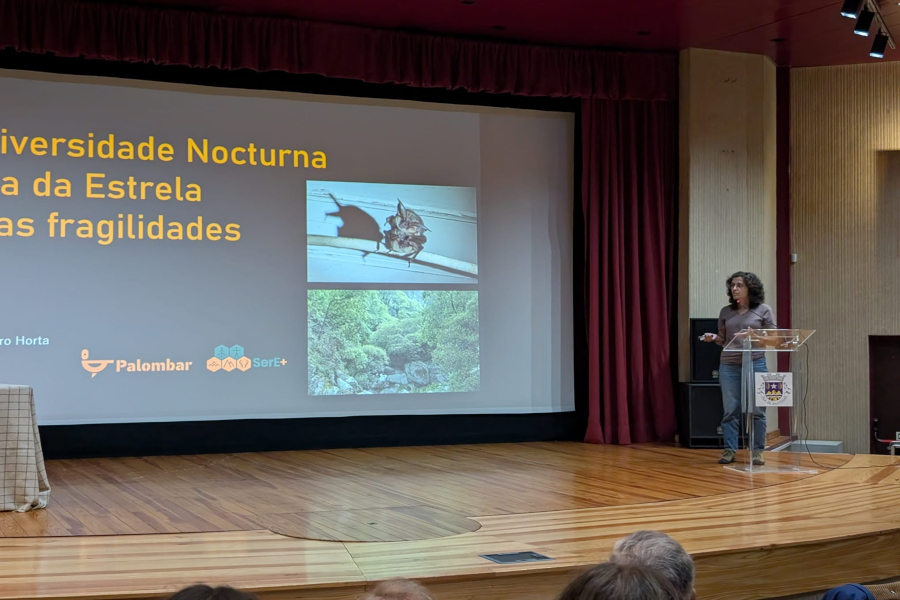
Light pollution has been on the rise in Portugal and is affecting nocturnal wildlife. Photo: DR.
On 18 July, Palombar – Nature and Rural Heritage Conservation took part in the event ‘Half the magic is when the day ends’, organised by AAPeD – the Association of Friends of Penhas Douradas – to celebrate the 50th anniversary of the Serra da Estrela Natural Park. The event focused on nocturnal biodiversity, as well as the impact of light pollution on wildlife, ecosystems and human health. At this event, which took place in the mountain village of Manteigas, Palombar highlighted the negative effects of light pollution on nocturnal wildlife species, habitats and society, and made important contributions towards mitigating this problem. We also organised a bat monitoring session.
The nocturnal biodiversity of Serra da Estrela and its vulnerabilities
Helena Raposeira, a biologist and researcher at Palombar, gave a talk at this event on the topic “The nocturnal biodiversity of Serra da Estrela and its vulnerabilities”, as part of the round-table discussion “The Night in Debate”, which also featured presentations by Anabela Simões, director of the Central Regional Department for Nature Conservation and Biodiversity at the ICNF (Institute for Nature Conservation and Forests); Raul Cerveira Lima, a researcher in the field of light pollution; Biscaia Fraga, a medical doctor and president of AAPeD; and Federico Neiman, director of the Travancinha Astronomical Observatory.
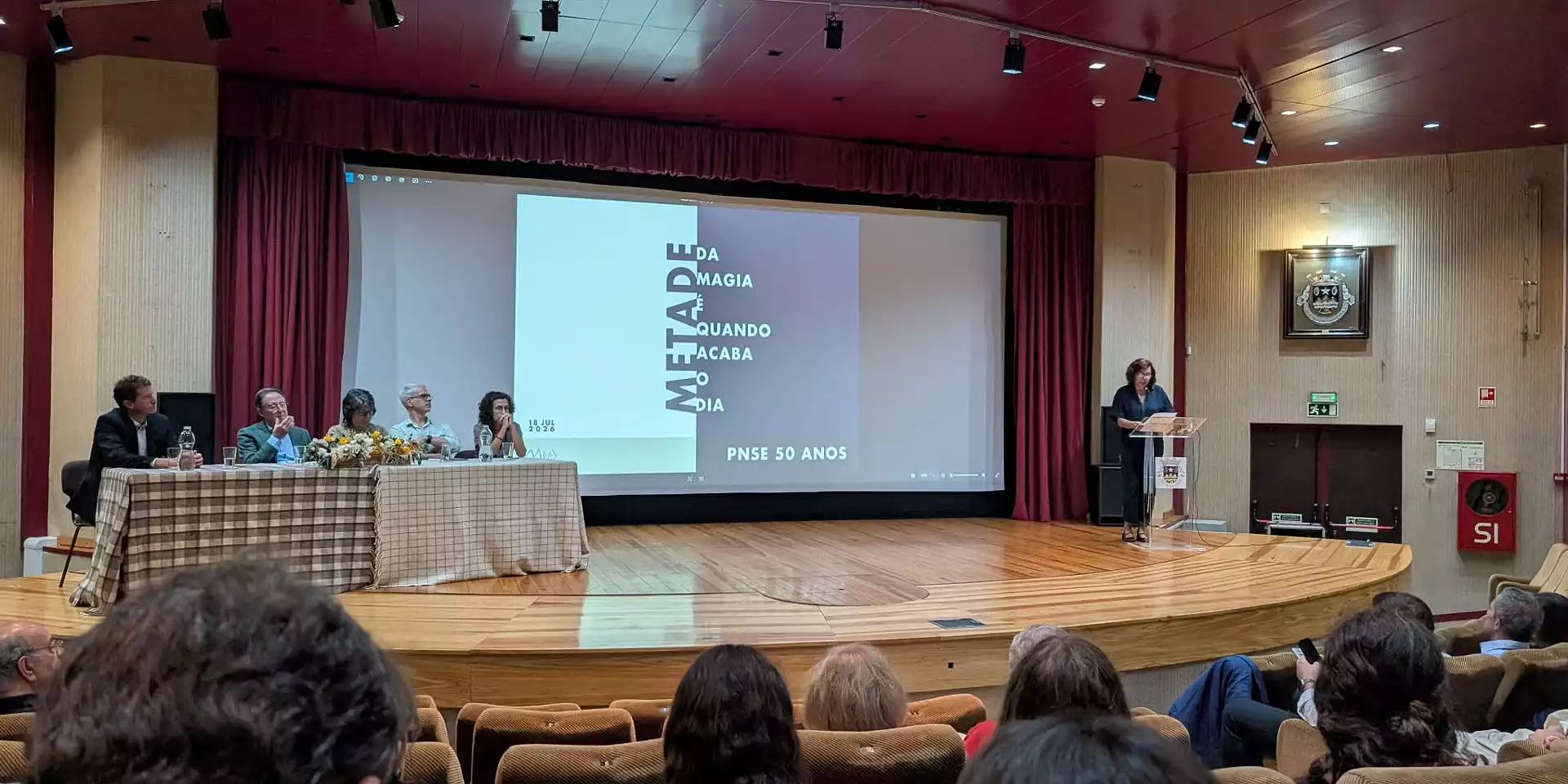
Round-table discussion ‘The Night in Debate’. Photo: DR.
When light becomes a problem
Light pollution – characterised by the excessive or inappropriate use of artificial lighting in space and time, which interferes with natural levels of darkness – causes significant changes to biodiversity, particularly in the activity and feeding patterns of various species, reducing the time available for nocturnal and crepuscular wildlife to feed, whilst also increasing habitat fragmentation and the risk of predation. These factors jeopardise the reproductive success and survival of many species.
Furthermore, the human population is exposed to artificial light during 90 per cent of its circadian cycle in everyday life, which causes various health problems, such as disruptions to the biological clock, inhibiting melatonin production and affecting sleep quality, which in turn leads to fatigue, anxiety and depression. Consequently, excessive exposure to artificial light contributes to an increased risk of stroke, obesity and a higher susceptibility to type 2 diabetes.
Light pollution has been on the rise in Portugal
Light pollution has increased significantly in recent years across Portugal, which has some of the worst levels in Europe – a situation to which the widespread installation of high-powered white LED lighting has contributed dramatically.
There is an urgent need to tackle light pollution and restore conditions of lower light levels
It is therefore urgent to restore conditions of lower light levels, which should be around 1–2 lx rather than 10–20 lx – a level 10 to 20 times higher than necessary. Other measures include using warm-coloured light (< 2700 K), directing luminaires only towards areas where it is strictly necessary, using motion sensors and timers, and carrying out a prior assessment of the impacts of lighting projects near areas of high natural value or protected areas – for example, avoiding the use of lighting near wildlife shelters.

Map of upward radiance (Raw VIIRS satellite upward radiance) obtained from the VIIRS sensor, showing the intensity of artificial light emitted into the atmosphere and detected by the satellite. Source: DarkSkySites (www.darkskysites.com), based on data from VIIRS/NASA.
Bat monitoring session: we didn’t see them, but we heard them (and hearing is just as important as seeing)
During the event, Palombar also organised a night-time bat monitoring session, led by the association’s biologists and researchers Pedro Horta and Helena Raposeira.
The session was very well attended, and there were many questions from a group that remained attentive throughout and keen to find out more about the bat species found in Portugal and their importance.
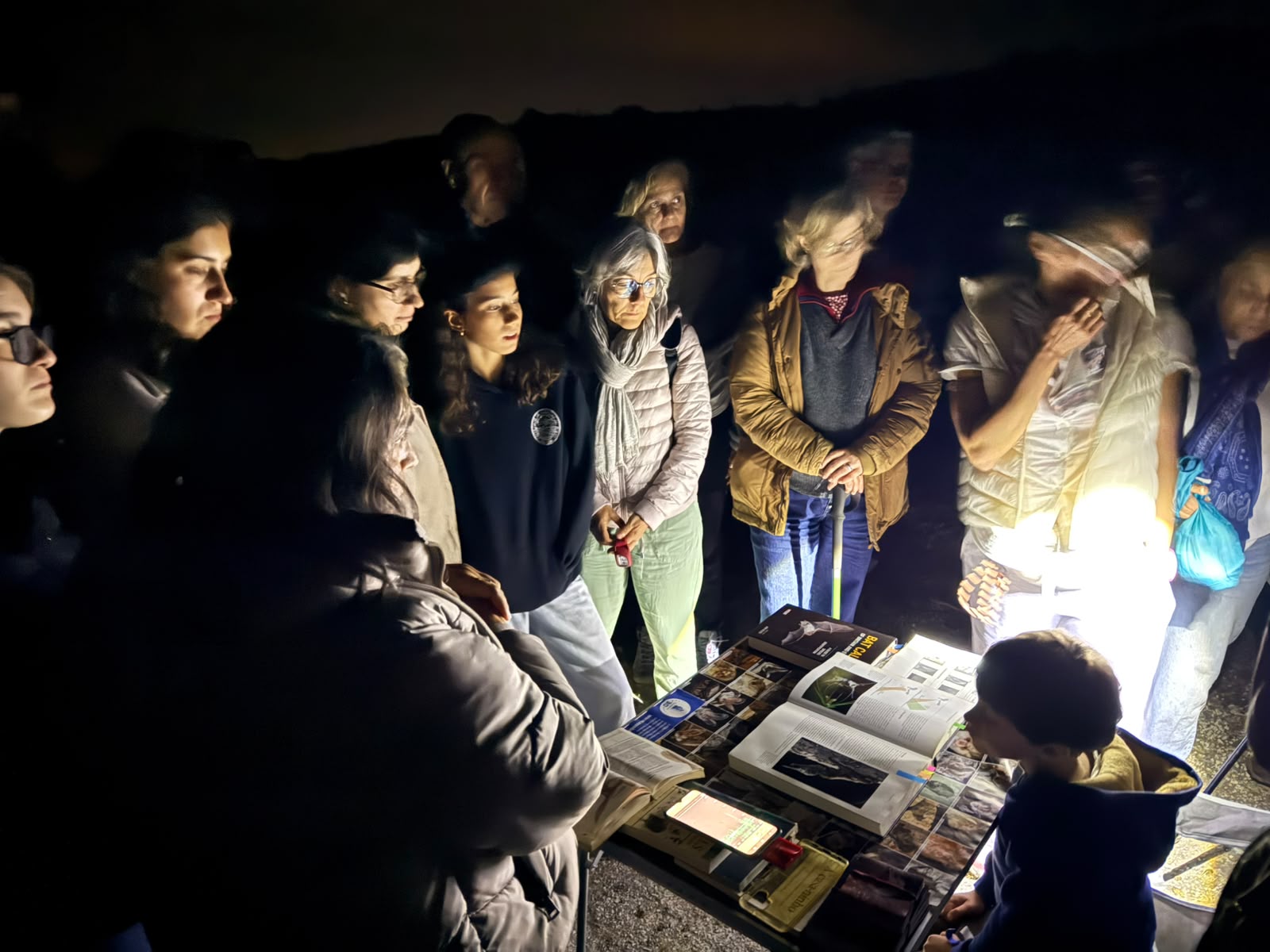
Sounds from eight species of bat were recorded. Photo: DR.
During this session, no bats were caught in the mist nets used for monitoring, but their echolocation and social calls were recorded by the ultrasonic detectors. For those who study these nocturnal creatures, hearing is just as important as seeing. We recorded the sounds of eight species of bat: the Leisler's bat (Nyctalus leisleri), the meridional serotine (Eptesicus serotinus/isabellinus), the common pipistrelle (Pipistrellus pipistrellus), Kuhl’s pipistrelle (Pipistrellus kuhlii), the soprano pipistrelle (Pipistrellus pygmaeus), the European free-tailed bat (Tadarida teniotis), the lesser horseshoe bat (Rhinolophus hipposideros) and Savi’s pipistrelle (Hypsugo savii).